
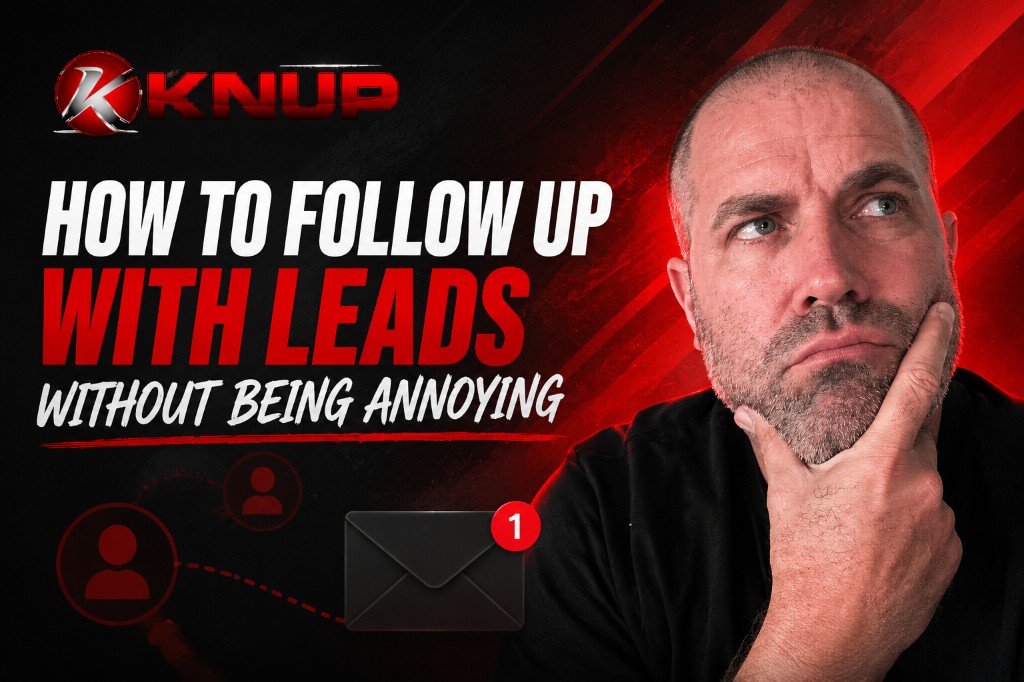
Getting the lead is only half the job. The other half is following up without making the other person regret giving you their name.
Most businesses fall into one of two traps. They get busy and never follow up. Or they panic and send five “just checking in” messages that feel like spam. Neither builds trust.
In Why Lead Generation Feels Harder Than Marketing, I talked about how hard it is to get a quality hand raise in the first place. This post is the sequel: what to do after someone does raise their hand, without becoming annoying.
Annoying follow-up vs helpful follow-up
Annoying follow-up is about you. It repeats the same ask. It ignores context. It shows up too often on the wrong channel. It treats every lead like they are one nudge away from buying.
Helpful follow-up is about them. It adds a useful next step. It respects timing. It matches the channel to the relationship. It makes it easy to say yes, not now, or no.
The goal is not endless chasing. The goal is to stay useful until the person is ready, then get out of the way when they are not.
Why people go quiet after they raise a hand
Silence does not always mean rejection. Sometimes life got busy. Sometimes they were comparing options. Sometimes a spouse, boss, or budget needs to weigh in. Sometimes they were curious, not ready.
That is why one polite first reply is rarely enough. It is also why seven identical nudges make you look desperate. Good follow-up assumes positive intent and still protects the relationship.
The rules I use before I send anything
- Lead with value. Share a tip, a resource, a clear next step, or an answer to something they already told you.
- Keep it short. If they have to scroll to find the point, cut it.
- One ask per message. Reply, book a call, or confirm interest. Not all three.
- Match the channel. Email for depth. Text for short confirmations. LinkedIn for professional context. Phone when the conversation is live.
- Make opting out easy. “Not a fit right now” should feel safe to say.
- Track the context. If you forget where you met them, they will feel it.
A simple follow-up cadence that works
This is a practical rhythm I like for most service and product businesses. Adjust it for your niche, but do not invent a new plan every week.
- Day 0: Same-day reply. Thank them, confirm what they asked for, and give the next step.
- Day 2: Add one useful piece of value tied to their situation. Soft ask.
- Day 5: Short check-in with one clear option: schedule, reply with timing, or say not now.
- Day 12: Final direct note. Offer to stay in touch or close the loop cleanly.
- Day 30+: Move them into light nurture if they still fit. Monthly or biweekly value, not daily chasing.
That cadence covers most warm leads without turning you into a pest. Hot leads can move faster. Cold list people should never get the hot-lead treatment.
Email: your default channel
Email is still the best home base for most follow-up. It is searchable, trackable, and less intrusive than a phone call.
Good subject lines are plain: “Quick next step,” “Resource from our chat,” “Still helpful?” Bad subject lines pretend urgency that is not real.
A useful Day 2 email might look like this:
- One line reminding them where you connected
- One tip or link that helps their exact problem
- One clear ask
Do not send a novel. Do not attach five PDFs. Do not write “circling back” with nothing new attached. If you have nothing useful to add, wait.
Text: short and respectful
Text works when the person already gave you their number or expects a quick reply. It is terrible for long pitches.
Use text for:
- Confirming a call time
- Sending a short link they asked for
- A same-day “great meeting you” after an event
- A gentle nudge when email went quiet and they preferred text
Keep it under a few sentences. Never blast marketing copy into SMS unless they opted in for that specifically.
LinkedIn: context without clutter
LinkedIn follow-up works best when the lead came from professional content, a referral, or a business conversation. It is weaker for parents at a youth sports event who never live on the platform.
Connect with a short note that references the real conversation. Do not immediately dump a sales pitch into the connection request. Once connected, one helpful message is enough. If they engage, continue. If they ignore it, move back to email or nurture.
Phone: when a live conversation is better
Calls feel pushy only when they are random. They feel helpful when the person asked for a conversation, booked a discovery call, or clearly needs a faster answer than email can give.
If you leave a voicemail, keep it human. Say who you are, why you are calling, and how to reach you. One voicemail plus one short email is usually enough before you wait.
Event and booth follow-up
This one is personal. When we set up Sports Mentorship as a vendor at an AAU tournament with hundreds of teams around us, the hard part was not visibility. The hard part was turning hallway conversations into later follow-up that did not feel forced.
Event leads go cold fast because people were distracted when they met you. Your follow-up has to rebuild the moment.
- Send the first note the same night or next morning
- Mention the specific conversation, court, raffle, or question
- Include one useful link, not a hard sell
- Offer a low-pressure next step
- Tag the source as event so your CRM does not treat them like a website demo request
If all you say is “Nice meeting you, here’s our pricing,” you wasted the relationship. Remind them why the chat mattered.
For the fuller before/during/after playbook from iGaming media shows to local booths, read How to Turn Event Conversations Into Actual Clients.
What actually makes follow-up annoying
- Sending the same “just checking in” message three times
- Following up on every channel at once with no new value
- Ignoring what they already told you
- Pushing a call before they understand the offer
- Writing long emails that bury the ask
- Acting offended when someone says not now
- Letting an automation run after they already replied
People do not hate persistence. They hate self-centered persistence.
Use a CRM so the system is kinder than your memory
Helpful follow-up is hard to do from a messy inbox. You forget who came from the website, who came from an event, who asked for pricing, and who said “next month.”
This is where a CRM earns its keep. I use and recommend ActiveCampaign because the method and the tool need to work together:
- Capture the lead with source and context tags
- Trigger a same-day confirmation
- Run a short warm-lead sequence with real value
- Stop the sequence when a human reply comes in
- Move quiet-but-fit leads into light nurture
- Keep notes so the next message sounds like a continuation, not a reset
The tool does not make you thoughtful. It makes thoughtful follow-up repeatable. Without tags and stop rules, automation becomes the annoying part.
Scripts you can adapt
Day 0 reply: “Thanks for reaching out. Based on what you shared, the next step is [X]. Here is the link / time options. If now is not right, just tell me and I will hold off.”
Day 2 value note: “Thinking about your note on [problem]. One thing that usually helps is [tip or resource]. Happy to walk through it if useful.”
Day 5 check-in: “Wanted to see if this is still on your list. Easy options: book a quick call, reply with a better time, or tell me to pause.”
Day 12 close-the-loop: “I do not want to crowd your inbox. If the timing is off, no problem. I can either check back later or leave this with you. Your call.”
Those lines work because they give the other person control. Control lowers annoyance.
When to stop
Stop when they say no. Stop when they ask you to. Stop when the fit is clearly wrong. Soft-stop when they go fully silent after a clean close-the-loop note.
Stopping is not quitting. It is respecting the relationship so a later re-open is still possible. Many of my better conversations came from people who were not ready the first time and remembered that I did not pressure them.
A 15-minute weekly follow-up habit
Once a week, open your CRM and review:
- New leads with no Day 0 reply
- Warm leads stuck between Day 2 and Day 12
- People who said “later” and need a calendar reminder
- Sequences that should have stopped after a human reply
- One improvement to your templates or tags
Fifteen focused minutes beats a chaotic Friday afternoon of guilt-follow-ups.
Where this fits in a real growth system
Follow-up sits between lead capture and revenue. If your website gets traffic but no leads, fix the handoff first with something like Why Your Blog Gets Traffic but No Leads. If leads exist but conversations stall, the follow-up system is usually the leak.
That combination of content, capture, CRM, and consistent outreach is a big part of what we build through Built by Knup. Tools help. Habits and clarity matter more.
Final thoughts
You do not need a perfect sequence. You need a respectful one. Reply quickly. Add value. Ask clearly. Give people an easy out. Track the context. Stop when you should. And after a verbal yes, make sure someone owns scheduling and payment — I wrote about that handoff in Separate the Closer From the Chaser.
Helpful follow-up feels like service. Annoying follow-up feels like pressure. The difference is almost always whether the next message helps them decide, or only helps you feel busy.
And if the conversations you are winning are all price-driven, the issue may be positioning. That side is covered in How to Price Your Services Without Undervaluing Yourself.
Follow-up works best when the relationship already has some trust behind it. For the bigger picture on networking across every level, read Never Get Too Important to Build Relationships. For how that becomes a full business philosophy, see Why Relationship-First Businesses Beat Transactional Ones. And when trust is ready for an intro ask, use How to Ask for Referrals Without Feeling Awkward.
Connect capture, CRM, and follow-up so leads do not go cold
Built by Knup helps you turn attention into conversations with clearer offers, better tagging, and follow-up that stays useful.