

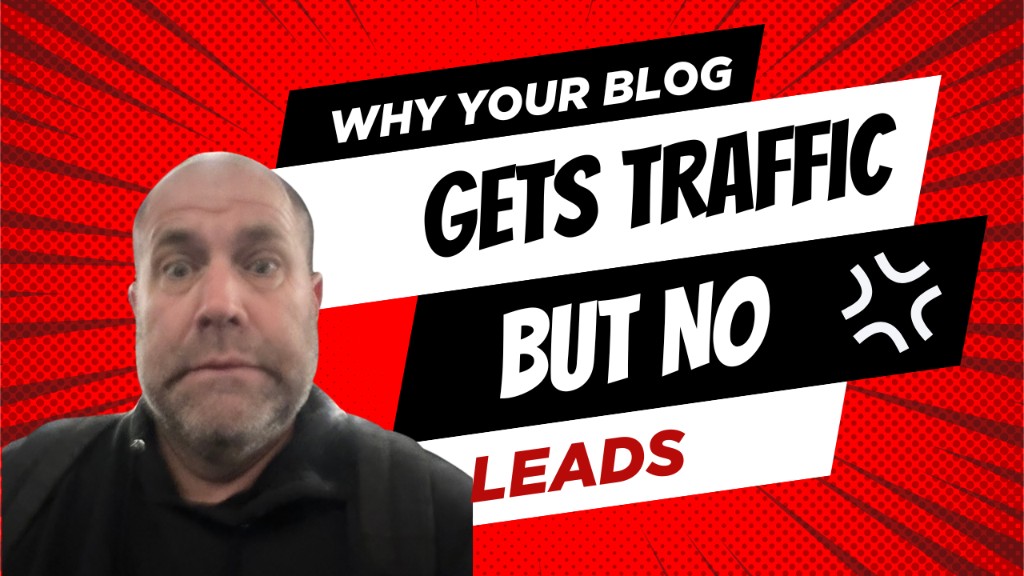
One of the most common messages I get is this: "Ryan, our traffic is up, but our leads are not moving." If that sounds like your blog right now, you are not broken. Your content probably is not the main issue. The issue is usually the handoff between reading and taking action.
In simple terms, traffic is attention. Leads are action. Those are two different jobs. Your blog can do a great job earning attention and still do a poor job guiding people into a next step. That gap is where most businesses lose money.
I have seen this on all kinds of sites: personal brands, service businesses, local companies, and content-heavy media pages. Once we tighten the path from post to offer, lead numbers usually improve without needing to double content output.
This article focuses on the website side of that problem. For the broader business challenge—including why the right audience can still be hard to convert at events, through content, and across other marketing channels—read Why Lead Generation Feels Harder Than Marketing.
Traffic is not the finish line
A lot of people treat pageviews like a final score. They should be treated like a signal. Pageviews tell you people are interested. They do not tell you your site is converting.
If your goal is business growth, you need every post to answer one question: what should this reader do next? If the next step is unclear, people leave. No lead. No follow-up. No sale.
1. You may be attracting readers, not buyers
Some posts naturally bring broad traffic from search. That is not bad. It just means many readers are early in their decision process. For example, educational posts can perform well but still convert low.
This is why I like to keep a mix of content types. You need top-level awareness posts, but you also need practical "what to do next" posts. A post like How to Monetize Traffic Spikes on Your Website usually catches readers who are closer to action than broad theory posts.
2. Your call to action is weak, vague, or hard to find
I still see this all the time: a great article and then one tiny "contact" link at the bottom. Most people never scroll that far. And if they do, "contact us" is usually too generic.
A better approach is one clear CTA near the top, one in the middle, and one at the end. Keep the wording simple. Tell people exactly what they get.
Example CTA language that works better: "Get my blog-to-lead email setup checklist." You can route that to ActiveCampaign so leads are captured and tagged right away. If you want that setup, use my ActiveCampaign link here.
3. The offer does not match the article topic
Relevance matters more than design. If someone reads a content strategy post and your CTA pushes an unrelated service, conversion drops. Your offer has to feel like a natural next step from the exact thing they just read.
This is one reason I talk a lot about keeping organized source ideas. A structured story bank helps you align articles and offers by topic. If you have not read it yet, my post on a story library is a good place to start.
4. Your form is creating friction
When someone is ready to raise their hand, do not make them jump through ten hoops. Long forms can feel like work. Work lowers completion rates.
For most blog lead capture, a short form is enough: first name, email, and one qualifier question. You can ask for deeper details later after trust is built.
If you use ActiveCampaign, keep your first form simple and automate the rest with tags and short follow-up sequences. If you want a clean starting point, this is the one I recommend: ActiveCampaign setup through this link.
5. You are not building trust quickly enough
Readers do not become leads because of one line of copy. They become leads when they believe you understand their problem and can guide them to a result.
Good trust signals are simple: short proof points, a clear process, real examples, and an honest tone. You do not need hype. You need clarity.
Internal links help here too. They show depth. For example, if someone wants a wider content workflow, linking to your post on repurposing content for your brand gives readers another useful step and keeps them in your ecosystem.
6. You publish and then stop
A lot of blogs have no follow-up system. Someone reads, maybe clicks once, and disappears. That is lost value.
You need a simple post-publish path:
First, route the reader to a focused offer. Next, capture the lead. Then send a short email sequence with helpful next steps. If that lead is warm, invite them to a discovery call. If not, keep nurturing with useful content.
This is exactly why I often pair content with tools and systems. If you want to browse more tools that support this process, check out my resources page.
Get your lead capture system in place
Want the CRM and email side done right? Start with ActiveCampaign, then connect it to your blog flow so each post can produce leads.
A simple fix you can do this week
Pull your top three blog posts by traffic. On each one, add one focused CTA that matches that article. Link the CTA to one short form and one clear offer.
Then track for 30 days: CTA clicks, form completion rate, and qualified replies. You do not need perfect data. You just need enough feedback to improve the path.
If you need help building the full stack, my team does this through Built by Knup. If you want to start with the email engine first, go straight to ActiveCampaign here.
Final thought
If your blog gets traffic but no leads, do not assume your writing is bad. Most of the time, your handoff is weak. Fix the handoff and your current traffic starts producing better business results. For the bigger frame — why publishing alone is not the whole job — read Posting Is Not Marketing.
Want me to review your blog to lead path?
I can help you tighten your pages, offers, forms, and follow-up so your traffic turns into real opportunities.