
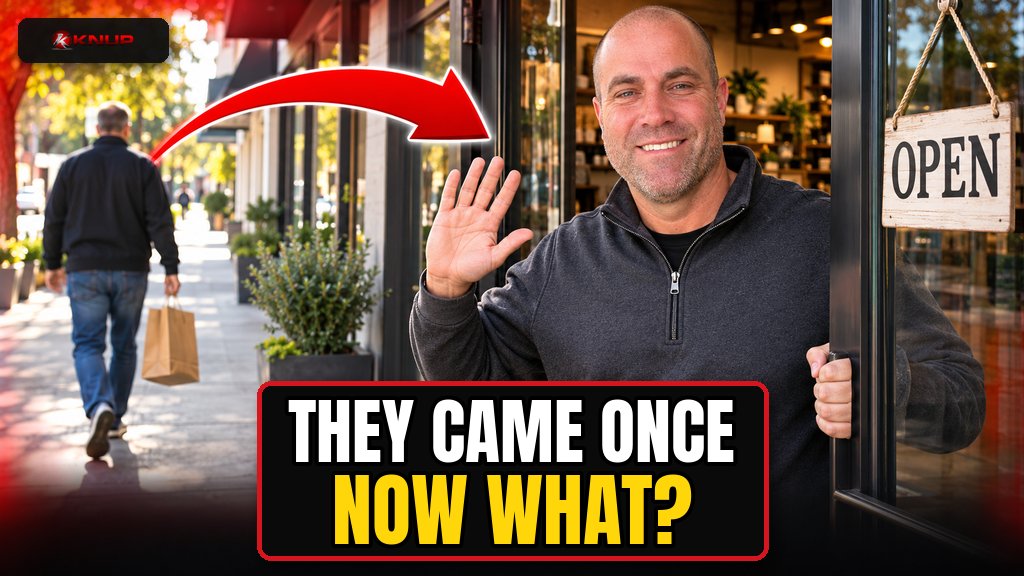
A big shopping day like Small Business Saturday does something most days don't. It puts brand new people in front of you. People who walked past your place for years. People who found you on a map. People who came in because a friend dragged them along.
That's the win everybody celebrates. But a lot of those shoppers buy one thing, have a good time and never think about you again. Not because they didn't like you, but because nothing gave them a reason to come back.
So this post is about the part after the rush. How to turn first-time customers into repeat customers without being pushy or spammy about it. It works after Small Business Saturday, and after any busy day, event or launch that brings in new faces.
If you're reading this before the big day, start with my post on how to prepare your small business for Small Business Saturday. This one picks up where that one leaves off.
Why the second visit matters more than the first
Getting someone in the door once is mostly about being visible. Getting them back is about the relationship.
American Express's 2026 Shop Small Impact Study has a number worth paying attention to. Recommendations from friends and family were the top way consumers said they choose small businesses, at 65%, ahead of customer reviews at 45% and social media posts at 39%. In the same study, 80% of small business owners said Small Business Saturday can help build relationships that last beyond the holidays.
Quick note on what that study is. It was two online surveys run by Teneo for American Express, one of 1,008 U.S. adults and one of 503 owners and managers of small businesses that sell from a physical location. So these are people's answers about their plans and opinions, not sales receipts. Still, it lines up with common sense. People pick small businesses because someone they trust told them to.
So the goal for the weeks after a big day isn't another sale today. It's turning one good visit into a habit, and that habit into a recommendation.
How to turn first-time customers into repeat customers
Here's the plan I'd follow. None of it is complicated. The hard part is doing it while you're tired from the rush.
1. Make it easy to stay in touch, and let people choose
If you don't have a way to reach someone again, you're just hoping they remember you.
At checkout, give people an easy way to stay in touch. An email list, a text list, or both. A sign-up on a tablet, a QR code by the register, a link on the receipt.
Two rules here.
Give them a clear reason to join. "Join our list" isn't a reason. "We send one email a month with what's new and our upcoming events" is. "Text us and we'll let you know when the next batch is ready" is. Tell people exactly what they're signing up for.
Never add anyone without asking. Don't take the email from a receipt or a card payment and start sending them marketing. It feels sneaky, and it starts the relationship on the wrong foot. Every marketing email you send should also have a clear, easy way to unsubscribe. Texting has its own consent rules too, so get clear permission before you text anyone marketing messages, and check the rules where you do business.
If you want to go deeper on building a list people are happy to be on, I wrote about how to start a newsletter people actually open, including the basic email rules.
2. Send a short thank-you within a few days
This is a step a lot of businesses skip, and that's why it stands out.
Within a few days of the visit, send a short thank-you to the people who joined your list. Not a sales email. Not "here's 10 more things you should buy." Just a thank-you.
Something like this:
"Thanks for stopping in Saturday. It was great to meet so many new people. If you have any questions about what you picked up, just reply to this email. We read every one."
That's it. Short, human, and signed with your name, not "The Team." The point is to make them feel like they visited a place with people in it, not a checkout line.
3. Ask for an honest review while the visit is fresh
Customer reviews came in second in that Amex study. And the best time to ask is right after the visit, while people still remember it.
You can add a simple ask to your thank-you note, or send it separately a day or two later. Keep it easy. Google's help page on getting more reviews suggests sending customers a link or a QR code that goes straight to your review form, and replying to the reviews you get.
A few things to keep it clean:
- Ask everyone, not just the people you think loved you. Asking only your happiest customers can paint a picture that isn't real.
- Don't trade anything for a review. Google says offering free or discounted stuff in exchange for reviews is strictly prohibited on Maps. The FTC's rule on consumer reviews also bans giving incentives for reviews that express a particular sentiment, so read 16 CFR 465.4 if you're tempted.
- Don't ask your staff or family to post reviews as if they were regular customers.
- Reply to the reviews you get, the good ones and the not-so-good ones. Keep it short and real, and don't use a reply to pitch a deal.
Honest reviews from real customers are worth more than a pile of five-star reviews nobody believes.
4. Give people a simple reason to tell a friend
If word of mouth is the top way people pick a small business, then your job is to make it easy for someone to talk about you.
Most people are happy to recommend a place they liked. They just don't think about it. So give them something to share.
- A short line in your follow-up like "If you know someone who'd like this, forward this email to them"
- A card in the bag with your name, hours and address so they can hand it to someone
- A link to your Google profile or website that's easy to text to a friend
Don't make it a big ask. You're just reminding happy people that they can share you. I wrote a whole post on how to ask for referrals without feeling awkward if this part makes you uncomfortable. It makes most of us uncomfortable.
5. Follow up in two to four weeks with something useful
This is where most businesses either disappear or blow it.
They either go quiet, or they start blasting coupons until people unsubscribe. Neither one builds a relationship.
Instead, about two to four weeks after the visit, send something actually useful. What that looks like depends on your business.
- A boutique could send how to care for what people bought, or what's new in store
- A restaurant could share a new menu item or an upcoming event
- A service business could send a quick tip that helps people get more out of what they paid for
The test is simple. Would someone be glad they opened it, even if they don't buy anything that day? If yes, send it. If it's just "BUY NOW," rethink it.
I wrote about how to follow up with leads without being annoying, and a lot of it applies to new customers too. Short, useful, and spaced out.
6. Track who actually comes back
You don't need fancy software for this. Make a simple list in a spreadsheet or a doc of the new people who joined your list after the big day. Then note who comes back over the next couple of months. If your point-of-sale system can show repeat customers, even better.
After a month or two, look at it and ask a few questions.
- How many of the new people came back at least once?
- Which follow-ups got replies, opens or visits?
- Did anyone mention a friend sent them?
Then do more of what worked next time. That's how one big day turns into a system instead of a one-time spike.
Mistakes that push new customers away
- Sending too much, too soon. A thank-you, a review ask and one useful follow-up in the first month is plenty for most businesses.
- Making every message a sale. If every email is a discount, people learn to wait for discounts.
- Going silent. If they never hear from you, they forget you exist.
- Ignoring replies and reviews. If someone takes the time to write back, write back.
Final thoughts
A big shopping day is a great way to meet new people. But the real value is the people who come back next month, and the friends they bring with them.
So make it easy to stay in touch, say thank you like a human, ask for honest reviews, give people something to share, follow up with something useful, and keep track of who returns. None of it costs much. It just takes doing it.
The first visit is the introduction. The second visit is where the relationship starts.
FAQ
How do you turn first-time customers into repeat customers?
Get permission to stay in touch, send a short thank-you within a few days, ask for an honest review while the visit is fresh, give people an easy way to tell a friend, follow up in two to four weeks with something useful instead of a sales blast, and track who comes back so you can do more of what works.
What should I send customers after Small Business Saturday?
A short thank-you within a few days, signed by a real person, with no sales pitch. Then an ask for an honest review. About two to four weeks later, something useful, like care tips, what's new or an upcoming event.
Can I add customers to my email list from their receipts?
Don't add anyone to your marketing list without asking. Let people choose to join, tell them what they'll get, and make it easy to unsubscribe. Texts have their own consent rules, so get clear permission first.
Is it OK to offer a discount for a Google review?
No. Google says offering incentives like free or discounted goods in exchange for reviews is prohibited, and the FTC's rule on consumer reviews bans incentives for reviews that express a particular sentiment. Ask every customer for an honest review instead.
How soon should I follow up with a new customer?
A thank-you within a few days, then a useful follow-up about two to four weeks after the visit. That's often enough to stay on their mind without wearing out your welcome.
How do I know if my follow-up is working?
Keep a simple list of new customers from the big day and note who comes back over the next couple of months, which messages got replies, and whether anyone says a friend sent them. Then repeat what worked.