
When a two-letter country code suddenly “means” the hottest phrase in tech, registrars light up and portfolios get heavier overnight.
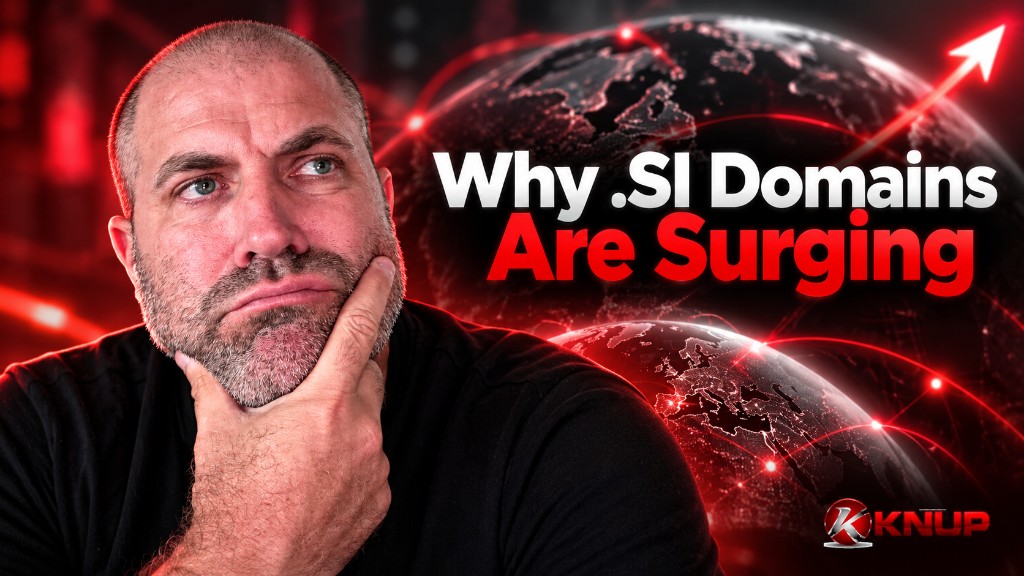
That is what is happening with .si — Slovenia’s country-code top-level domain. Speculators are not suddenly obsessed with Ljubljana tourism sites. They are buying the story that SI = Super Intelligence, the same way earlier cycles mapped .ai to artificial intelligence and .io to input/output.
After owning about 1,600 domains at peak, I have seen this movie: a narrative, a cheap entry price, a rush of registrations, then a long renewal bill for names nobody builds on. This post breaks down why .si is popping now — and how to think about it without turning hype into another inventory problem.
What a .si domain actually is
.si is Slovenia’s official ccTLD, managed by ARNES / Register.si. It has been around since the early 1990s. For a long time it was mostly a local and regional web extension.
The speculative twist is eligibility: anyone in the world can register through accredited registrars. No Slovenian residency. No local presence requirement. That openness is what lets a U.S. investor treat .si like a brandable tech extension instead of a pure country play.
Practical details that matter for buyers:
- Typically 2–63 characters
- Open global registration at most major registrars
- Relatively affordable vs saturated AI-adjacent extensions
- No WHOIS privacy on .si — accurate registrant data is expected under EU rules
Search .si names before the obvious ones are gone
If you are hunting a short brandable or an SI-hack, start with a registrar that already carries .si — I use Dynadot for domain work across the portfolio.
The catalyst: Super Intelligence entered the mainstream news cycle
Domainers floated “SI = superintelligence” before this week. What changed is the volume of attention.
In late September 2026, President Trump told the United Nations that U.S. documents should stop saying “artificial intelligence” and start saying super intelligence — shorthand SI. Whether the tech industry adopts that language long-term is an open question. Experts have already noted that “superintelligence” usually means something more advanced than today’s AI products.
Speculators do not wait for academic consensus. They buy the ticker symbol of the narrative. Overnight, Slovenia’s ccTLD looks like a two-letter brand for the phrase of the week.
That is the same psychology that turned Anguilla’s .ai into a default AI badge. The country code became a category code. Speculators want the next category code while inventory is still cheap.
Why the .si thesis feels familiar to domain investors
Three forces are stacking at once:
1. The meaning hack
Short extensions win when they read as English abbreviations. .tv became television. .ai became artificial intelligence. Investors want .si to become super intelligence — or at least “sounds like an AI company URL.”
2. The price gap vs .ai
Good .ai names got expensive. Renewals and aftermarket prices rose as the extension went mainstream. .si still feels early: lower registration cost, more leftover dictionary and brandable strings than a fully mined namespace. Speculators love “early but not imaginary.”
3. A few end-user signals already landed
Before the UN speech, 2026 already had .si chatter: registration growth reports, investor landers, and at least one high-profile aftermarket headline in Recursive.si — tied to a well-funded company building toward superintelligence. Even if that company still routes traffic to a .com, paying real money for a .si name is the kind of data point forums amplify into a gold rush.
Put those together and you get the current wave: political shorthand + AI branding hunger + cheaper entry than .ai.
What speculators are actually registering
Pattern-match the cart, and you will see the same shopping list every trend cycle:
- One-word English brands that “sound like a startup”
- AI / agent / model / neural / robot style keywords + .si
- Names that end in “si” as a hack (brandsi.si vibes)
- Ultra-short strings while they last
- Anything that looks like it could be a product, lab, or fund name
That is not strategy. That is FOMO with a search box. The same energy that fills portfolios with names you will not develop — the drain I wrote about in The Real Cost of Owning Too Many Domains.
What can go wrong (and usually does)
Speculative extensions fail for boring reasons:
- The nickname never sticks. If “super intelligence” stays a political phrase and industry keeps saying AI, the marketing story weakens.
- Liquidity stays thin. Early sales are often investor-to-investor. End users move slower than Twitter threads.
- Renewals punish the pack-rat. Fifty “maybe” names become a quiet subscription.
- Trademark and brand risk still apply. A hot extension does not make a famous company name safe. See Why I Avoid Athlete Team and Event Domains Now.
- Privacy expectations surprise buyers. .si is not a hide-your-WHOIS playground.
A domain is still a brand decision. The extension is packaging. That is the same filter I use in How to Pick a Domain Name for a New Business.
How I would think about .si if I were buying today
I am not telling you to flood your cart. I am telling you how I would stay disciplined if the SI story keeps running:
- Buy to use, or buy with a clear exit buyer in mind. If you cannot name who would pay later, you are collecting stickers.
- Prefer short, clean, brandable strings over long keyword spam.
- Cap the budget. Trend extensions are entertainment until they are an invoice.
- Assume the political buzz fades. If the name still works without the Super Intelligence headline, it is stronger.
- Do not confuse registrar activity with end-user demand. Registrations rise first. Brands arrive later — or never.
If you build AI products or content, your stack and offer matter more than the TLD fashion cycle — even in a year packed with AI tools for freelancers. A sharp .com with distribution still beats a clever .si parked on a lander.
Who should actually care about .si
- Slovenian businesses and projects — the intended use case still matters
- Brands whose name ends in “si” — a clean brandable hack can be useful
- Selective investors — small, high-quality bets, not hundred-name dumps
- Founders who already own the matching .com — defensive or secondary branding only when it earns its renewal
Everyone else is late to a story they do not need. Multiple weak niches rarely beat one clear brand — which is why I keep returning to one brand vs many niche sites.
Final thoughts
Speculators are suddenly buying .si domains because a two-letter country code collided with a two-letter political slogan for AI. The entry price is low. The .ai parallel is irresistible. A few real sales gave the forums a chart to screenshot.
None of that guarantees the extension becomes the next category standard. Domains reward patience, use, and selective taste — not the fastest click after a speech. Watch the trend. Buy only what you would still want if “Super Intelligence” stops trending next month.
Register selectively — or get a cleaner domain strategy
Search .si and other extensions on Dynadot when you have a real brand use case. If you want help pricing, listing, or cleaning a portfolio, start Domain Discovery.