
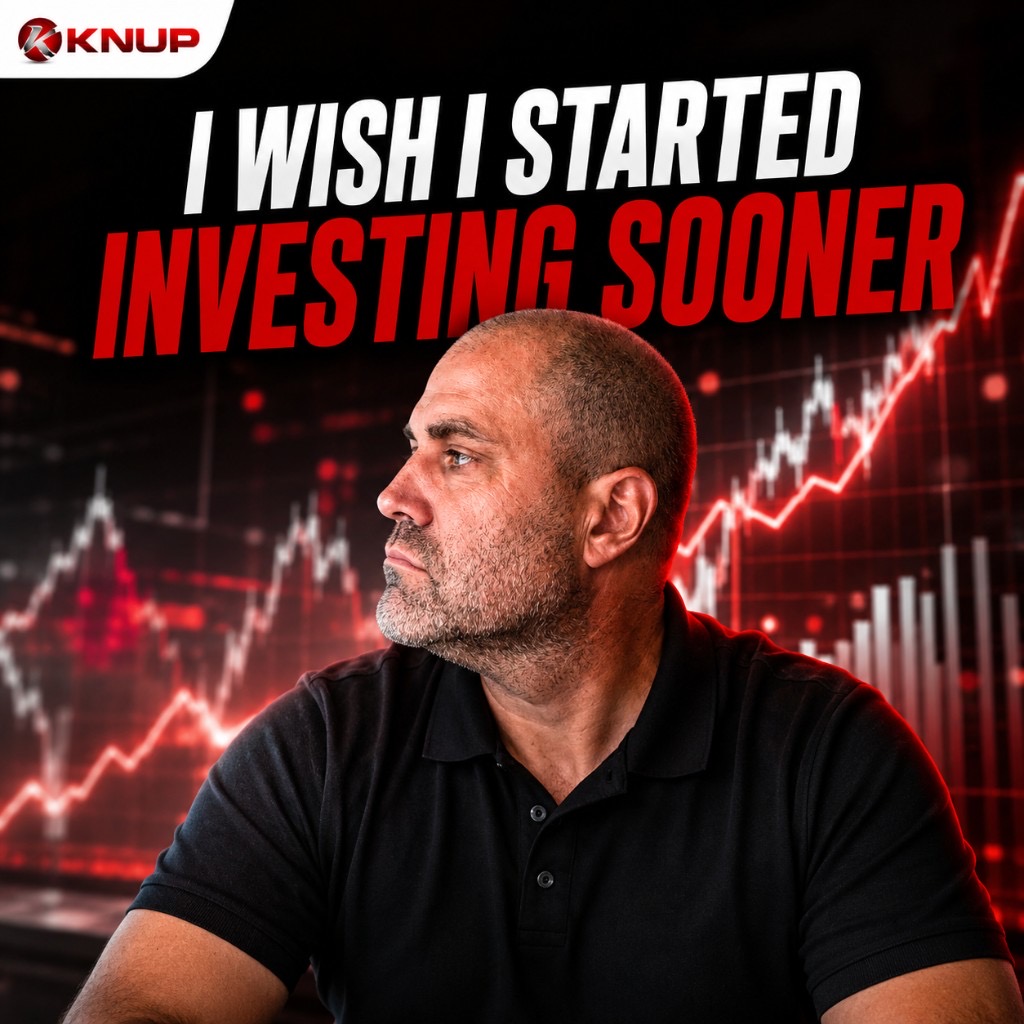
One of my clearer regrets is not buying stocks earlier in life.
Not because I think I would have become a market genius. Because time is the one edge beginners undervalue. Compounding does not care how busy you were building businesses, raising a family, or waiting for the “right” moment.
I am not a financial advisor. This is not stock advice. This is my personal story of starting late, keeping it simple, and deciding the next 10–20 years will include consistent investing — not perfect investing.
Some links below are affiliate / referral links. If you sign up through them, I may earn a commission at no extra cost to you.
The regret is real — and useful
For years I put energy into businesses, deals, domains, content, and hustles. That work mattered. It also became an excuse. “I will invest when things settle.” Things never fully settle.
Starting late does not mean starting poorly. It means I refuse to wait another decade for a cleaner calendar. The next chapter is long enough to matter if I stay consistent.
Where the money comes from: extra cash, not hype money
My approach is simple. When extra cash shows up — especially from sports card deals and reselling — I do not let it disappear into lifestyle creep. I move it toward stocks.
That habit sounds boring. It works. The same mindset behind profitable reselling applies here: the wins are less about excitement and more about repeated, honest actions. I wrote about that in The Boring Habits That Make Reselling Profitable.
I am not dumping rent money into the market. I am redirecting surplus. Card deal closes. Cash hits. Portion goes to investing. Next.
Year one: Cash App kept it simple
For about the last year I used Cash App to buy stocks. That was on purpose.
I did not need a complicated setup. I needed a low-friction place to start. Cash App made it easy to move money and buy without turning investing into another project I overbuilt.
- Simple interface
- Easy to fund with available cash
- Good enough for a beginner rhythm
- No day-trading temptation theater
Was it the most advanced brokerage experience? No. Was it the right on-ramp for me? Yes.
 Where I Started
Cash App
A simple way to move money and get started buying stocks without overcomplicating the first year.
Now: Robinhood feels a bit better
I am now trying Robinhood. For my use case, it feels a step better — clearer investing flow, and it syncs with the money platform I already wanted to use.
Again: I am not doing a ton. I am not day trading. I am putting extra funds into positions I am willing to hold. The tool should support the habit, not become the hobby.
 My Current Brokerage
Robinhood
The investing app I am using now for a cleaner long-term buying experience that connects with my money tracking.
Monarch: seeing the whole money picture
Investing in isolation is easy to romanticize and hard to sustain. I want the stock buys to live inside the same view as the rest of life and business cash flow.
That is why Monarch matters in this stack. Robinhood syncing into Monarch helps me see investing next to real spending, not as a mystery tab I open when markets bounce.
Visibility beats vibes. Same lesson as a life audit: if you cannot see the money, you cannot steer it. Related thinking is in Do a Life Audit Before You Go Location Independent.
 Money Platform
Monarch
The personal finance platform I use to track money across accounts — including investing activity that syncs from Robinhood.
My investing principles (no ticker list)
I keep rules simple on purpose:
- I only buy companies I believe in. If I cannot explain why in plain English, I pass.
- Typically bigger companies. Not because small companies are bad — because I am still building the habit and want less chaos.
- No day trading. I am not trying to outsmart charts between meetings.
- Long horizon. Think 10–20 years, not this week’s headline.
- Extra cash first. Surplus from deals and hustles funds the buys.
- Consistency over intensity. Small repeated transfers beat rare heroic dumps.
That is the whole philosophy. Belief. Size I can sleep with. Time. Cash I can actually spare.
What I am not doing
- Promising returns
- Telling you what to buy
- Pretending I started early
- Turning investing into a second full-time job
- Using money I need for operations or family basics
If someone needs complex tax strategy, options, or leveraged products, that is a different conversation with a licensed professional. My lane here is beginner honesty.
Why this fits the rest of my life right now
We are simplifying systems, cleaning up money habits, and building toward more location independence. Investing surplus into ownership is part of that redesign — not separate from it. The broader life-and-work shift is in What We're Changing So We Can Work From Anywhere.
Businesses create cash. Reselling creates cash. The question is where the cash goes after the win. Lifestyle is fine. Ownership is better when the money was already “extra.”
A simple starter checklist if you also started late
- Admit the regret without using it as a reason to wait longer
- Pick one low-friction account and fund it with surplus only
- Write three personal rules before you buy anything
- Buy companies you can explain to a friend in one minute
- Track the habit in a money app so it stays visible
- Ignore day-trading content that turns ownership into gambling theater
- Review quarterly, not hourly
Perfect is not available. Started is.
Final thoughts
I started investing in stocks later than I wish I had. That sentence used to feel like failure. Now it feels like a deadline I finally accepted.
Cash App got me moving. Robinhood is the better current home for the habit. Monarch keeps the money picture honest. Extra cash from cards and deals funds the buys. Belief beats hype. Time beats timing.
If you are in the same place, start simply. Future you does not need a perfect first trade. Future you needs a first decade of ownership.
Ready to start with the tools I am using?
These are affiliate / referral links for the apps in my current beginner investing setup. Use what fits. Keep it simple.