
For years, friends and family would ask me the same question. Do you know a good realtor? Every time, I sent them somewhere else. After enough of those conversations, it started to feel silly. I was leaving money on the table and sending people out of my circle when I could have helped.
That is a big reason I finally got my Florida real estate license in 2026. I also like a new challenge. I run Knup across websites, systems, sports, media, and more. Real estate fit into that world as another way to serve people I already know and meet new ones in Central Florida.
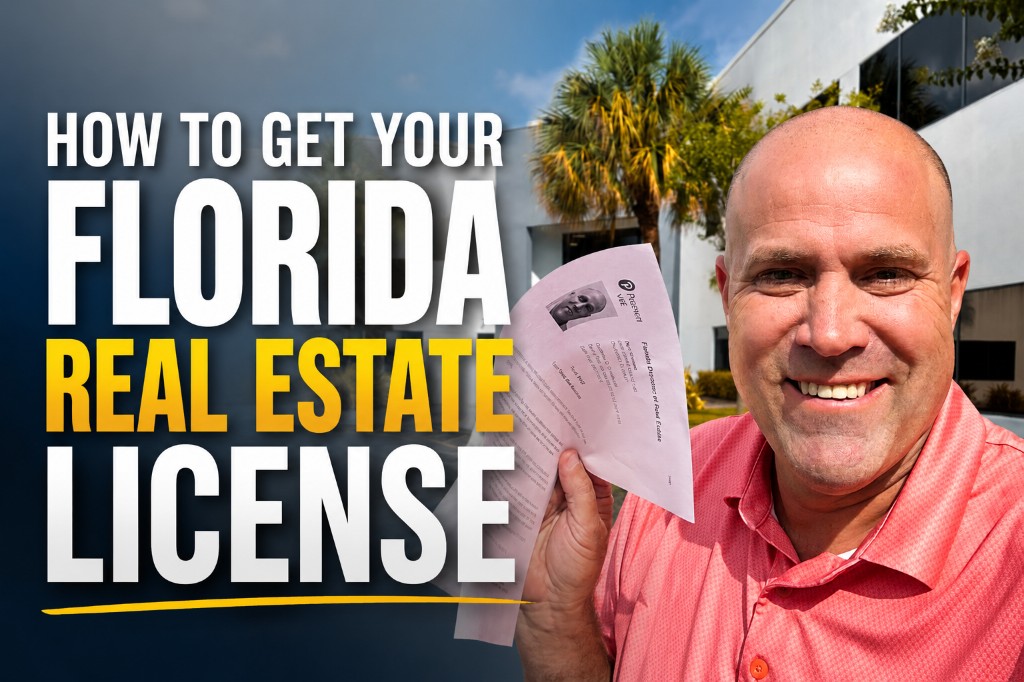
This post is the path I actually took. Not a perfect textbook version. The online course, the cram study style, the exam I failed by one question, the second try, fingerprints, costs, and joining Florida Homes Realty & Mortgage. If you are searching how to get your Florida real estate license, this is the practical version from someone who just did it.
Why I finally got licensed
Circle commission is real. For about ten years I could have kept more of those introductions inside my own network. I was always happy to refer people, but I kept thinking, I should just get licensed for these situations. At minimum, I wanted the option. At best, I wanted a new skill that connects to relationships I already build every day.
The funny part is how often the ask came up. Someone relocating to Orlando. Someone selling a house. Someone buying investment property. Someone moving near Lake Nona. I knew people. I could make intros. But I could not represent them myself. After a while that gap felt avoidable.
I was not trying to quit everything else and become a full-time agent overnight. Real estate sits alongside Knup. Same idea as other parts of the ecosystem. Learn the system, stay useful, and help when the right opportunity shows up. That mindset helped me move faster because I was not waiting for a perfect career plan. I just started.
What Florida requires in simple terms
Florida does not make this mysterious. For a sales associate license, the path looks like this:
Complete a 63-hour pre-license course with an approved provider. Apply with the Florida Department of Business and Professional Regulation (DBPR). Get electronic fingerprints through an approved Livescan vendor. Get approved to sit for the state exam. Pass the Pearson VUE sales associate exam with a 75 or higher. Activate with a brokerage before you practice.
That is the core. You can finish the course online. I did. You do not need a classroom unless you want one. From the moment I decided to do this to the moment I was licensed, it took about three to four months. The hard studying window was closer to two months. I am a crammer. That is just how I work.
If you are a planner who likes slow daily study, you can stretch it. If you are like me and work in bursts, set a hard exam date and reverse-plan from there. Either way, Florida’s process is clear enough that most of the delay comes from waiting, not confusion.
Why I used Aceable
I took the 63-hour course online through Aceable. That was my main path. No mix of providers. Just one online course I could do on my schedule.
A few things that helped me with Aceable. Mobile-friendly lessons meant I could knock out modules between other work. Short lessons beat long lectures when you are busy. Practice quizzes after sections keep you honest. Progress tracking makes it easier to see when you are actually close to done instead of guessing.
A few things that can trip people up. It is still a lot of material. If you treat it like background noise, you will forget half of it by exam week. Pause and take notes on math, agency, disclosures, and Florida-specific rules. Those come back on the state exam. Also, do not wait until the last night to run practice exams. Even as a crammer, I needed a few focused review days before test day.
One more Aceable tip from my own habits. Treat the end-of-section quizzes like mini exams, not participation trophies. If you miss a concept, rewrite it in your own words before you move on. That tiny habit saves hours later when you are trying to remember whether something is a Florida rule or a general real estate concept.
If you want the same course path I used, start here: Aceable through my link. At the time of writing they also run partner discounts, so that link can save you money on the course.
Start with Aceable online
This is the Florida pre-license course I used. Online, flexible, and built for people who need to finish around a real schedule.
How much does a Florida real estate license cost?
People ask this first, so here is a realistic range based on current fees and a normal online course path.
63-hour pre-license course: often about $100 to $500 depending on provider and promos. DBPR sales associate application: about $62.75. Livescan fingerprints: usually about $50 to $80. Pearson VUE exam: about $36.75 per attempt.
So if you pass on the first try, many people land somewhere around a few hundred dollars total for the license path. If you retake the exam like I did, add another exam fee. A practical planning range for getting licensed is often in the ballpark of a few hundred dollars to maybe around a thousand, depending on course price and retakes.
Then remember the next layer once you join a brokerage. Association dues, listing-service access, errors and omissions insurance, lockboxes, and marketing can add more in year one. Getting licensed is the entry ticket. Operating as an agent has its own costs. Always double-check live fees in your DBPR account and Pearson VUE booking before you pay. Numbers move over time.
Fingerprints and the DBPR application
This part was easy for me. I submitted the application, got fingerprints done through an approved Livescan vendor, and kept moving. No drama. No long surprise delays on my side.
Still, do not sleep on the details. Use the correct ORI for real estate applicants, make sure your fingerprints attach to your file, and keep your confirmation paperwork. If something stalls later, you want proof of what you already completed. Most delays I hear about are paperwork mismatches, not mystery rejections.
The exam story nobody loves to hear
Florida’s sales associate exam is 100 questions. You need a 75 to pass. I got a 74 on my first try. Failed by one question.
That stung.
What made it weirder is the feedback style. They do not tell you the exact questions you missed. You get category-level hints about weak areas. After you pass, you also do not get a clean “here is your exact score” moment the way some people expect. Odd system. Plan for it so it does not throw you mentally.
I came back for round two and passed. If you fail once, do not spiral. Pay the retake fee, review your weak categories, and go again while the material is still fresh. One point is not a career story. It is a schedule change.
My practical exam tips from that experience. Read every question slowly. Trick wording is real. Do the math problems carefully and double-check units. Do not burn time trying to be perfect on one item. Mark and return. Study Florida-specific law hard. National concepts matter, but Florida details decide a lot of close scores.
Also give yourself a calm test-day routine. Arrive early. Bring what Pearson VUE requires. Eat something normal. Do not cram brand-new topics in the parking lot. At that point you are either ready enough or you are not. Panic reading rarely adds points.
Joining a brokerage
After you pass, you still need to hang your license with a brokerage before you can practice. I joined Florida Homes Realty & Mortgage.
Why them? Lower commission structure, easy to work with, and they support entrepreneurs. That mattered to me. I am not a traditional nine-to-five agent model. I needed a brokerage that understood I also run businesses, build systems, and work across brands.
If you are choosing a brokerage, ask about splits, fees, support, tech, and how they treat people who are building more than one thing. The license gets you in the door. The brokerage decides how painful or flexible day-to-day work feels.
Getting licensed is not the same as getting leads
This is the part I wish more “get your license” posts said out loud. A license does not create clients by itself. You still need leads somehow. Referrals. Content. Local relationships. Follow-up systems. A clear offer.
I have not fully executed the sales side yet. That is honest. Passing the exam felt like a finish line, but it is really a starting line. If you already know how to build an audience or a business system, you have an edge. If you do not, plan for marketing the same week you plan for studying.
That is also why this fits my world. Knup is already about websites, funnels, CRM, and follow-up. Real estate needs those same pieces. People do not hire you because you passed a test. They hire you because they trust you and you make the next step easy.
If you want neighborhood guidance or help buying or selling in Central Florida, you can start on my real estate hub or go straight to real estate discovery.
A simple timeline you can copy
If you want a clean plan based on what worked for me, use this as a starting template.
Week 1: Sign up for Aceable, set a finish date, and block study time on your calendar. Weeks 2 to 6: Work through the 63-hour course. Do quizzes as you go. Do not save all review for the end. Week 6 to 7: Submit DBPR application and complete fingerprints. Week 8 to 10: Heavy practice exams. Schedule Pearson VUE when you are approved and ready. After you pass: Choose a brokerage, activate, and build a lead plan immediately.
Your dates may shift. Mine landed in a three to four month window overall. The key is a finish date. Without one, the course becomes something you “get to later.”
Common mistakes I would avoid
Waiting for the perfect season to start. There is always another project. Studying without practice exams. Reading feels productive, but timed questions expose gaps. Ignoring Florida-specific law because national content feels familiar. Assuming brokerage choice does not matter. Assuming the license equals clients.
If I could talk to myself at the start of this process, I would say this. Start Aceable now. Put the exam on the calendar. Treat the first fail as data if it happens. Pick a brokerage that fits how you actually work. Then build a simple lead plan before you celebrate too long.
Who this path is good for
This path is a strong fit if you already talk to people about homes, moves, investments, or local life and keep sending those conversations away. It is also a fit if you like learning new systems and can handle online coursework.
It is a weaker fit if you think the license alone will fill your calendar. It will not. Treat it like any other business skill. Credential plus process plus relationships.
If you are the kind of person who builds skills on purpose, you may also like my post on entrepreneur skills that help you move faster. Same idea. Learn the craft, then put systems behind it.
Final thoughts
I waited too long to get licensed. Not because the process was hard. Because I kept putting it behind other priorities. Once I started, the path was clear: Aceable online, DBPR application, fingerprints, exam, retake, brokerage.
If you are on the fence, start the course. Give yourself a date. Take the exam seriously. Expect weird score feedback. Pass, hang your license, and then get honest about leads.
That is how I got my Florida real estate license. And that is the advice I would give myself ten years of referrals ago. Living the market matters too — including soaking up Orlando before we leave. That chapter is in Why We Got Annual Disney Passes Before Leaving Orlando.
Get licensed, then talk Central Florida real estate
Use Aceable for the Florida course path I took. If you already need a Realtor for buying or selling in Central Florida, start a discovery conversation with me.