
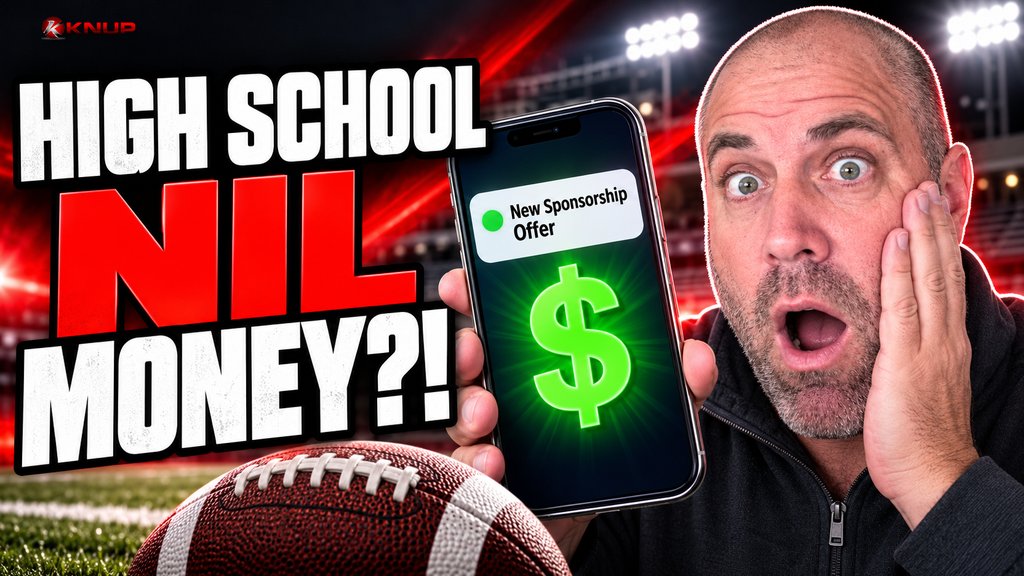
A lot of families think NIL is only for five-star recruits with a million followers. It is not.
In most states, a high school athlete can now get paid for their name, image, and likeness. And the deals most athletes will actually land are not shoe contracts. They are a local restaurant paying for a few posts, a gym trading a membership for content, or a youth camp paying a varsity player to coach for a Saturday.
I have seen NIL from a strange angle. Back in the Celebrity Club Network days, I built fan sites around famous names and got cease and desist letters from Miley Cyrus and Barry Manilow for my trouble. I tell that whole story in Why I Avoid Athlete Team and Event Domains Now. The lesson stuck: a person's name and likeness are valuable, and they belong to that person.
Now athletes get to use that value for themselves. That is a big part of why I am building Sports NIL, a place to make NIL understandable for athletes, parents, and businesses.
This is the practical version of how to get NIL deals in high school, without putting eligibility at risk.
What NIL means for a high school athlete
NIL stands for name, image, and likeness. An NIL deal is a business paying an athlete to use those things to promote something.
That usually looks like:
- Social media posts or short videos for a local business
- Appearances at a store opening, fundraiser, or community event
- Coaching camps, clinics, or private lessons
- Signing autographs or appearing in local ads
- Selling your own merch, like a logo shirt or a training guide
What NIL is not: getting paid to play, getting paid to pick a school, or getting paid because you scored 30 last Friday. Those lines matter, and we will get to them.
Check your state rules before anything else
High school NIL is governed by your state athletic association, not the NCAA. Every state is different.
As of October 2026, NIL for Kids counts 43 states plus Washington, D.C. that allow some form of high school NIL. Six say no: Alabama, Arkansas, Hawaii, Mississippi, Texas, and Wyoming. South Carolina's rulebook is unclear. Texas is a special case: a 17-year-old can sign NIL deals only with colleges, not with brands or businesses, while still playing high school sports.
Counts vary depending on who is doing the counting, and rules keep changing. So do this before you talk to a single business:
- Go to your state association's website and find the NIL or "personal branding" rule. Some states use that term instead of NIL.
- Read the actual rule, not a summary. Look for parental consent, reporting requirements, and banned categories.
- Check your school or district policy. Some add their own rules on top.
- Ask your athletic director. A two-minute conversation now beats an eligibility problem later.
"My state allows it" is the start of the homework, not the end.
Know the lines you cannot cross
Even in states that allow NIL, a few rules show up almost everywhere:
- No pay-for-play. Payment cannot be tied to stats, wins, or performance. "$50 per touchdown" is a problem. "$200 for three posts" is a deal.
- No recruiting inducements. A deal cannot be connected to choosing or staying at a school.
- No school marks. Most states do not let you use your school's name, logo, mascot, or uniform in NIL content without permission. Shoot your content in your own gear.
- Banned categories. Alcohol, tobacco and vaping, gambling, adult content, and often firearms and cannabis are off-limits for minors in many states.
- Disclosure. Some states require you to report deals to your school or association, sometimes before you sign.
If a deal makes you uncomfortable explaining it to your athletic director, that is your answer.
Build a brand a local business would want
Businesses do not pay for talent alone. They pay for attention and trust. The good news is a high school athlete does not need a huge following to have both locally.
Start with the basics:
- Clean up your social profiles. Assume a business owner, a college coach, and your grandmother will all scroll your feed. Delete anything you would not want on a billboard.
- Pick one or two platforms. Instagram and TikTok are where most athletes start. Post consistently instead of everywhere.
- Show more than highlights. Training, community service, schoolwork, family, your personality. Businesses want someone who represents them well, not just someone who can dunk.
- Write a simple bio. Sport, position, school year, town, and a contact email a parent monitors.
- Track your numbers. Followers, average views, and engagement. A business will ask, and knowing them makes you look prepared.
Grades and character count here too. A local business owner putting their name next to yours cares a lot more about how you treat people than about your vertical.
Confidence matters as well. Pitching a business owner is uncomfortable at 16. If your athlete needs help building that belief, the habits in How to Build Confidence in Young Athletes carry straight into this.
Start local: where most high school deals come from
National brands rarely sign high school athletes. Local businesses do, because a well-known athlete in a small community is real advertising.
Good places to start:
- Restaurants, coffee shops, and smoothie spots your team already goes to
- Gyms, trainers, physical therapists, and chiropractors
- Sporting goods stores and local apparel shops
- Car dealerships, banks, and real estate agents who sponsor local sports
- Youth leagues and camps that want older athletes as coaches
- Barbershops, salons, and other places where everyone in town talks
Make a list of 10 to 20 businesses you actually use or genuinely like. Real fit is easier to pitch and easier to post about.
Marketplaces and apps can help with discovery, but for most high school athletes, the first deal comes from a business that already knows them.
How to pitch a business
Do not ask "Do you do NIL deals?" Bring an idea.
A simple pitch looks like this:
Hi, I'm [Name], a junior [position] at [School]. My family and I come here every week after games. I'd love to promote [Business] to my followers and our community. I have [X] followers on Instagram, and my posts average [X] views. My idea: two posts and one story a month showing [specific thing], plus an appearance at your [event]. Would you be open to talking about a small partnership? My parent [Name] is cc'd.
A few rules that make pitches work:
- Be specific. Name the deliverables, how many, and when.
- Make it about them. What do they get? New customers, younger customers, local buzz.
- Include a parent. It builds trust and is often required for minors anyway.
- Pitch in person when you can. A short visit with a printed one-page summary stands out.
- Follow up once or twice, politely. Most "no" answers are actually "not right now." I wrote about the right rhythm in How to Follow Up With Leads Without Being Annoying. Same rules apply.
Price it without guessing
Pricing is where most athletes and parents freeze. I have struggled with this my whole career, and I wrote about it in How to Price Your Services Without Undervaluing Yourself.
For high school NIL, keep it simple:
- Start with what you deliver. A post, a story, an hour-long appearance, a camp session.
- Consider reach. More engaged local followers usually means more value.
- Product deals count. Free food, gear, or memberships are compensation. They still need to follow your state rules and may still be taxable.
- Start small and build proof. A first deal that goes well becomes your best pitch for the second one.
It is fine to start modest. It is not fine to work for free forever.
Get it in writing
Even a small deal deserves a short written agreement. It protects everyone.
Make sure it covers:
- Who is paying, and how much
- Exactly what you will do, and by when
- How long the business can use your name and photos
- No school logos, uniforms, or facilities
- No performance-based pay
- How either side can end the deal
- Parent or guardian signature, if you are a minor
Watch out for long exclusivity terms, contracts that last for years, or anything that gives a business rights to your name "in perpetuity." For anything bigger than a local deal, have an attorney review it. And be careful with agents or "NIL marketing" companies that want a big cut or an upfront fee.
If you post sponsored content, disclose it clearly with #ad or the platform's paid partnership label. Federal endorsement rules apply to athletes too.
Handle the money like a business
NIL money is income. Treat it that way from the first deal.
- Taxes. NIL earnings are generally taxable, and many athletes are treated as self-employed. That can mean self-employment tax on top of income tax. The IRS explains self-employment tax here, and the IRS Self-Employed Individuals Tax Center covers the rest. Set money aside and talk to a tax professional.
- Records. Keep every contract, invoice, payment, and product received in one folder or spreadsheet.
- Bank account. A separate account makes tracking much easier.
- Parents in the loop. A minor often cannot sign contracts alone. Parents should see everything.
Think about college before you sign
High school deals can follow you. If you plan to play in college, the rules there are different and stricter on reporting.
At the college level, NCAA Division I athletes must report third-party NIL deals worth $600 or more through the NIL Go system, typically within five business days. College coaches and compliance offices will care about what you signed in high school, especially anything long-term.
Before signing, ask:
- Does this deal run past my senior year?
- Does it conflict with brands a college might be tied to?
- Would I be comfortable showing this contract to a college compliance office?
For a solid overview of how NIL connects to recruiting, NCSA's NIL explainer is a good read.
And keep perspective. For most high school athletes, NIL is a nice bonus and a great business lesson. Recruiting, grades, and development still matter more for the long game. That is the whole idea behind Sports Mentorship: helping athletes win at life, not just at sport.
Common mistakes to avoid
- Signing before checking state and school rules
- Wearing a school uniform or logo in sponsored content
- Accepting pay tied to stats or wins
- Promoting banned categories like vaping, alcohol, or gambling
- Skipping a written agreement because "it's just a local deal"
- Ignoring taxes until a tax bill shows up
- Signing a long-term contract that follows you into college
- Paying an upfront fee to someone promising deals
A simple 30-day NIL game plan
- Week one: Read your state association's NIL rule and your school policy. Talk to your athletic director.
- Week two: Clean up your social profiles, write a bio, and write down your follower and view numbers.
- Week three: List 10 to 20 local businesses and write one specific pitch idea for each.
- Week four: Pitch your top five, in person when possible, with a parent involved. Follow up a week later.
When you land the first deal, deliver more than you promised. Then use it as proof for the next one.
Final thoughts
Learning how to get NIL deals in high school is mostly about doing the boring things right. Know your rules. Build a brand you are proud of. Pitch local businesses with a real idea. Get it in writing. Treat the money like a business.
Do that, and NIL becomes more than a little extra cash. It becomes an early lesson in marketing, sales, and owning your own name. Those skills last a lot longer than any sports career.
If you are navigating this as an athlete, parent, or business, keep an eye on Sports NIL. We are building tools and guides to make all of this easier to understand.
FAQ
Can high school athletes get NIL deals?
Yes, in most states. As of October 2026, one detailed count shows 43 states plus Washington, D.C. allow some form of high school NIL, while Alabama, Arkansas, Hawaii, Mississippi, Texas, and Wyoming do not allow typical brand deals. Rules vary, so check your state athletic association first.
How do high school athletes find NIL deals?
Most start locally. Make a list of businesses you already use, like restaurants, gyms, and sporting goods stores, then pitch a specific idea with clear deliverables and a parent involved. NIL marketplaces can help, but local relationships usually land the first deal.
Can I wear my school uniform in an NIL post?
Usually not. Most states prohibit using school names, logos, mascots, uniforms, or facilities in NIL content without permission. Shoot sponsored content in your own clothes and away from school property.
Do high school athletes pay taxes on NIL money?
Generally, yes. NIL income, including some product or service compensation, is usually taxable, and many athletes are treated as self-employed. Keep records of every deal and talk with a tax professional.
Will a high school NIL deal affect my college eligibility?
It can if the deal breaks your state's rules or runs into college. Avoid pay-for-play and recruiting-linked deals, keep contracts short, and expect college compliance offices to review anything that continues once you enroll.
NIL made understandable
Tools, guides, and opportunities for athletes, parents, and businesses.