
Find your real baseline, build up gradually, protect one longer walk, and let the little stuff like parking farther away and walking calls fill in the rest.
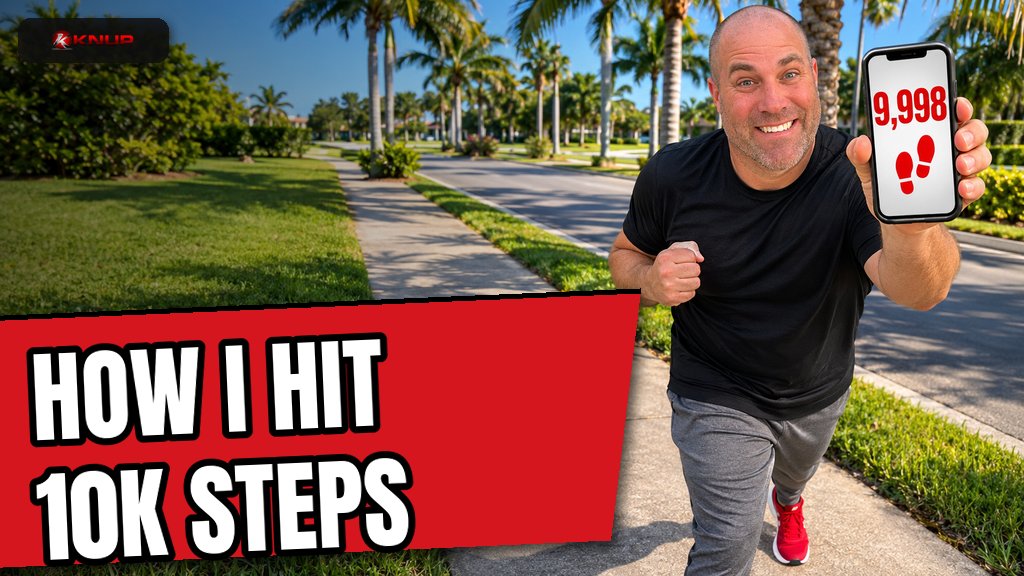
On October 31, I started a public health accountability challenge on X. One of my daily targets is 10,000 or more steps.
That number sounds simple until you work from a laptop most of the day. I can sit down at 9 AM, look up, and realize it is mid-afternoon and my phone says I have barely moved. If you work at a desk, drive everywhere, or spend your evenings on the couch with the kids' games on TV, you probably know the feeling.
So this is the practical plan I use to get 10,000 steps a day, backed by what the research and health organizations actually say. I am not a doctor or a trainer. This is not medical advice, and it is not a weight-loss promise. If you have a heart condition, joint problems, a recent injury, or any long-term health issue, check with your doctor before you ramp up your walking.
Where the 10,000 step number came from
Here is the funny part. The 10,000 step goal did not start in a lab.
McGill University's Office for Science and Society explains that in 1965, a Japanese company called Yamasa Toki introduced a step counter named the Manpo-Kei, which translates to "10,000 steps meter." It was marketed with the slogan "Let's walk 10,000 steps a day." The number was catchy and round, and it stuck. You can read the full story in McGill's piece, 10,000 Steps, Myth or Fact?
That does not make it a bad goal. It just means 10,000 is a handy target, not a magic line where good health suddenly switches on.
How many steps a day do you actually need?
The best evidence I found is a 2022 meta-analysis published in The Lancet Public Health. Researchers combined 15 studies with nearly 50,000 adults and looked at daily steps and risk of death from any cause.
According to UMass Amherst's summary of the study, which was led by epidemiologist Amanda Paluch:
- More steps a day were linked to a lower risk of premature death, until the benefit leveled off.
- For adults 60 and older, that leveling off happened around 6,000 to 8,000 steps a day.
- For adults younger than 60, it happened around 8,000 to 10,000 steps a day.
- The researchers found no definitive link with walking speed beyond the total number of steps.
You can see the original paper in The Lancet Public Health.
Mayo Clinic lands in a similar spot. In a Mayo Clinic Q&A on counting steps, a Mayo physical therapist says there is not really a magic number. If you can get 10,000 steps a day, great, but most of the reduction in premature death in the research happened between 4,000 and 8,000 steps, and after 10,000 the benefits start to plateau.
The bigger picture comes from the CDC. Its adult physical activity guidelines say adults need at least 150 minutes of moderate-intensity activity a week, like 30 minutes of brisk walking five days a week, plus two days of muscle-strengthening activity. The CDC also says some physical activity is better than none.
So my takeaway is simple. If you are at 3,000 steps a day, getting to 6,000 is a real win. Ten thousand is a good, clear target for someone like me who is under 60 and sits a lot, but it is not a pass-fail test.
Step 1. Find your real baseline
Before you chase 10,000, figure out what you are doing right now.
Most phones count steps automatically, and so do most smartwatches. Look at your average over the last week or two, not just yesterday. One busy day at a theme park or one lazy Sunday will throw it off.
Mayo Clinic's advice here is practical. The best device is the one you will actually use. Your phone, a watch, or an old-school pedometer all work. Just know that no tracker is perfect. McGill points out that if your phone sits on the counter while you do chores, those steps do not count, and everyone's stride is a little different. Use the number to spot trends, not to argue with yourself over 200 steps.
Step 2. Build up instead of jumping straight to 10,000
If your baseline is 4,000 and you try to hit 10,000 tomorrow, your feet, knees, and schedule are all going to complain. That is how a habit dies in the first week.
Mayo Clinic recommends taking it slow and steady and listening to your body. Its walking guide says it is OK to start slowly, especially if you have not been exercising regularly, and to add a few minutes each week as your fitness improves.
A simple way to do that is to raise your daily target a little at a time and hold it until it feels normal before raising it again. Boring works. Boring is the whole point.
Step 3. Protect one real walk every day
This is the one that moves the number the most.
McGill notes that a 30-minute walk generally comes out to about 3,000 to 4,000 steps, depending on your stride. It also estimates that a sedentary but otherwise healthy person might take about 6,000 to 7,000 steps a day just through normal daily tasks. Add one 30-minute walk to that and you are in the neighborhood of 10,000.
Some ways to make that walk happen:
- Put it on the calendar. If it is not scheduled, meetings and errands will eat it.
- Attach it to something you already do. After lunch, after dropping the kids off, or right after your last call of the day.
- Split it if you need to. Mayo Clinic says your steps add up across the day. A 15-minute walk in the morning and another at night count the same as one 30-minute walk.
- Pick a route you like. A loop around the neighborhood, a park, or anywhere that does not feel like a chore.
If you want it to count as moderate activity, walk with a little purpose. Mayo Clinic's talk test is easy. If you can talk but would have a hard time carrying on a full conversation, that is brisk for you.
Step 4. Stack small steps into the day you already have
This is where a lot of people quietly find 2,000 or 3,000 extra steps without a single extra workout.
Here are ideas that come straight from Mayo Clinic's guidance, plus a few that fit how I work:
- Park farther away from store and office entrances.
- Take the stairs instead of the elevator when you can.
- Make multiple trips carrying in groceries or packages instead of loading up in one.
- Walk in place while you wait, like when the microwave timer is running.
- Turn calls into walking calls. If I do not need to look at my screen, I am up and moving. Mayo Clinic also suggests walking meetings.
- Use a walking pad while watching TV or doing food prep, if you have the space and budget for one.
- Get up every hour. A quick lap around the house or the office breaks up long stretches of sitting.
None of these feels like exercise, which is exactly why they work. I wrote more about setting up a workday that keeps you moving in how to work remotely without a home office.
Step 5. Use days you are already on your feet
Some days the steps come almost for free. A trip to a theme park, walking a round of golf instead of riding, a long day at a youth sports complex, or exploring a new city on foot.
I am not going to make up a step count for any of those, because it depends on the day and the person. But if you know a big walking day is coming, enjoy it, and do not feel like you need to cram in extra steps the day before to make up for it.
If you work from places like the parks, I put together the best places to work remotely at Walt Disney World, and walking between those spots adds up.
On hot days, especially in Florida, take water with you. My guide on how to stay hydrated on the golf course covers the same basics for any long day in the heat.
Step 6. Track it without getting obsessed
I keep score of almost everything, and I wrote about why in I keep score of everything including life. Steps are an easy scoreboard because your phone does the counting for you.
A few things that help me:
- Check the number mid-afternoon, not at 10 PM. If you are way behind at 3 PM, you still have time for a walk. At 10 PM, you just feel bad.
- Look at weekly averages. One low day does not ruin anything. A low week tells you something.
- Share it if accountability helps you. Posting the challenge publicly on X is a big reason I keep showing up for it. Telling a friend or family member works too.
- Do not let the number replace everything else. The CDC's guidelines also call for muscle-strengthening activity at least two days a week, which steps alone will not cover.
Step 7. Gear and safety basics
You do not need much to walk, but a few things make it easier to stick with. Mayo Clinic recommends:
- Comfortable, supportive shoes that fit well.
- Loose, comfortable clothing that matches the weather, with moisture-wicking fabric if you can.
- Bright or reflective clothing if you walk when it is dark.
- Safe, well-lit routes, and letting someone know your route if you are walking alone.
- An indoor option like a mall with open walking hours when the weather is not safe or comfortable.
- A slow start and slow finish. Walk easy for the first few minutes to warm up, then slow down at the end to cool down.
If something hurts in a way that is more than normal soreness, back off and talk to a professional.
My simple 10,000 step plan
If you want the short version, this is it:
- Check your average daily steps over the last week or two.
- Raise your target a little at a time instead of jumping straight to 10,000.
- Protect one 30-minute walk a day, or two 15-minute walks.
- Stack small steps like parking farther away, stairs, and walking calls.
- Check your count mid-afternoon so you still have time to catch up.
- Judge yourself by weekly averages, not one day.
- Add strength work at least two days a week, per the CDC.
Final thoughts
Ten thousand steps started as a pedometer slogan, but it turned out to be a pretty useful target for a lot of people. The research says the biggest wins come from moving from very little to a moderate amount, and the benefits level off somewhere in the 6,000 to 10,000 range depending on your age.
So do not get hung up on the exact number. Find where you are, add a little, and make walking part of the day you already have.
If you are watching what you drink while you are at it, check out my lists of the best low calorie drinks for staying under your calories and the best energy drinks for a daily calorie limit.
FAQ
Is 10,000 steps a day really necessary?
Not for everyone. The 10,000 step goal started as a 1965 marketing slogan for a Japanese pedometer. A 2022 meta-analysis in The Lancet Public Health found the benefit for risk of premature death leveled off around 6,000 to 8,000 steps a day for adults 60 and older and around 8,000 to 10,000 for adults under 60. Any increase from a low baseline is a good start.
How long does it take to walk 10,000 steps?
It depends on your stride and pace. McGill University's Office for Science and Society estimates a 30-minute walk is about 3,000 to 4,000 steps, so walking all 10,000 steps in one go would take more than an hour for most people. Most people get there by combining normal daily movement with one or two intentional walks.
Do steps have to be done all at once?
No. Mayo Clinic says walking has a cumulative effect across your day, so a 15-minute walk in the morning and another at night count the same as one 30-minute walk. Steps from chores, yard work, and errands count too.
Does walking speed matter?
For the risk of premature death, the 2022 Lancet Public Health meta-analysis found no definitive link with walking speed beyond the total number of steps. For the CDC's 150 minutes of moderate activity a week, brisk walking is the usual example. Mayo Clinic's talk test is a simple check: if you can talk but would struggle to hold a full conversation, you are walking briskly.
What is the easiest way to add more steps?
Start with one daily walk, even 10 to 15 minutes, then stack small habits like parking farther away, taking the stairs, making multiple trips with groceries, and taking phone calls on your feet. Raise your goal gradually so it sticks.