
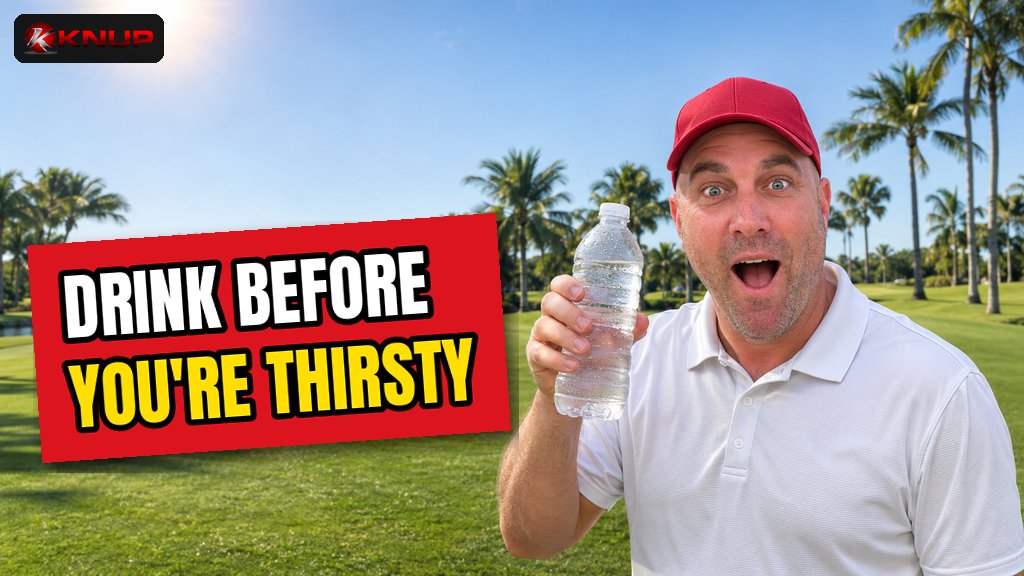
Hydration on the golf course is mostly a planning problem. Start the round already hydrated, drink small amounts on a steady schedule instead of waiting until you are thirsty, add electrolytes on long sweaty days, go easy on alcohol and big caffeine, and know the warning signs of heat illness before they show up on the back nine.
I am not a golf instructor, and I am definitely not a doctor. I am a regular golfer who usually lives somewhere between 95 and 100, and I play a lot of my golf in Florida, where "hot and humid" is not a weather event. It is just Tuesday.
Here is something I have noticed at my level. The holes that get away from me late in a round are not always about my swing. Sometimes I am just cooked. My focus slips, I rush shots, and I make the kind of decisions I would never make on the first tee. A lot of that comes down to something boring that most of us ignore until it is too late: water.
This post is the simple plan I use to stay hydrated on the golf course, built on guidance from the CDC, NIOSH, the National Weather Service and Mayo Clinic. It is not medical advice. If you have a heart condition, kidney issues, take medications, or have been told to limit fluids or salt, talk to your doctor about what is right for you before a long round in the heat.
Why hydration matters more in golf than people think
Golf does not feel like a hard workout, which is exactly why people get caught. You are outside for hours, often in full sun, walking or riding between shots, standing on hot fairways and greens with very little shade. You might not feel like you are sweating much, but over a full round it adds up.
Mayo Clinic explains that your body loses water all day through breathing, sweating and going to the bathroom, and it does not make enough on its own to replace what is lost. It also notes that even mild dehydration can make you feel like you have less energy and make it harder to think clearly.
Less energy and fuzzy thinking. That is a pretty good description of how a lot of us play holes 14 through 18.
The CDC adds in its page on water and healthier drinks that dehydration can cause unclear thinking, mood changes and overheating. In golf terms, that is a three-putt, a bad club choice, and a cart ride where you are annoyed at everything.
How much water do you actually need?
There is no single magic number for everyone. Mayo Clinic says the amount of water your body needs depends on your health, age, activity level, where you live and the weather. As a general starting point, it says studies suggest the average healthy adult gets enough with about 11.5 cups (2.7 liters) to 15.5 cups (3.7 liters) of total fluid a day, and that includes fluid from food and all drinks, not just water.
A hot day on the golf course pushes you toward the higher end of that, and maybe past it.
For time spent active in the heat, the most practical guidance I have found comes from NIOSH, the CDC's workplace safety institute. Its heat stress recommendations are written for people who work outside, but the logic fits a summer round really well:
- For moderate activity in the heat that lasts less than 2 hours, drink 1 cup (8 ounces) of water every 15 to 20 minutes.
- If sweating lasts for several hours, drink sports drinks containing balanced electrolytes.
- Avoid alcohol and drinks with high caffeine or sugar.
- Generally, fluid intake should not exceed 6 cups per hour.
That last point matters. More is not always better. The goal is steady, not chugging a gallon at the turn.
Before the round
Hydration starts before you ever get to the course. If you show up already behind, you spend the whole round trying to catch up.
Here is what I try to do:
- Drink water with breakfast or lunch before you leave. Nothing crazy, just do not show up running on coffee alone.
- Check the forecast and plan for it. A 95-degree afternoon tee time and a cool fall morning are not the same round. Plan your water for the round you are actually playing.
- Pack more water than you think you need. The CDC's simplest heat tip is to carry a water bottle and refill it throughout the day. A big insulated bottle filled with ice water is the easiest win in golf.
- Freeze a bottle the night before. The CDC suggests freezing water in freezer-safe bottles for ice-cold water all day. By the back nine it has melted into cold water instead of warm plastic-flavored water.
- Know where the water is. Many courses have coolers on the course or a halfway house. Do not assume. Ask in the pro shop before you tee off.
If you can pick your tee time on a brutal summer day, the CDC also recommends doing outdoor activities during the coolest parts of the day when possible. An early morning round is a lot easier on your body than a 1 PM one.
During the round
This is where most golfers mess it up, me included. We drink a bunch on the first couple of holes, get into the round, and forget about it until we feel awful.
The fix is to tie drinking to the game itself so you do not have to remember.
Drink on a schedule, not on thirst
NIOSH's guideline is about 1 cup every 15 to 20 minutes. I am not going to time myself with a stopwatch on the course, so I keep it simple. Every tee box, take a drink. Not a giant gulp, just a real drink.
You can also tie it to walking off every green or every time you get back in the cart. The trigger does not matter. What matters is that it happens every hole, whether you feel thirsty or not.
Keep your water where you can reach it
If your bottle is buried in the bottom of your bag, you will not drink it. Clip it to the outside of the bag, keep it in the cart cup holder, or carry it in your hand to the tee. Easy access means you actually drink.
Use the shade and cool off when you can
The CDC's heat and health advice is to stay in the shade as much as possible, and the NHS gives the same kind of advice for hot weather, including staying in the shade, wearing a hat and light clothes, and having regular cold drinks. On a golf course that means:
- Stand in the shade while you wait on the group ahead.
- Wear a hat and light, breathable clothing.
- Use a cold, wet towel on your neck when it is really hot.
- Do not sit in the sun on a bench when there is a tree 20 yards away.
Add electrolytes on long, sweaty days
Water is the default. But when you are sweating for hours, you are losing salt along with the water. That is why NIOSH says that if sweating lasts for several hours, sports drinks that contain balanced electrolytes can help.
A full round in summer heat usually lasts longer than a couple of hours, so on those days I like to mix in something with electrolytes, especially on the back nine. Just read the label. A lot of regular sports drinks have a good amount of sugar and calories, which the CDC lists along with sodas and energy drinks as sugary drinks. If you are watching your calories like I wrote about in my post on the best low calorie drinks for staying under your calories, look for a lower-sugar option or an electrolyte mix you add to water.
Do not forget to eat
Long rounds plus no food is a bad combo. A simple snack at the turn helps, and the CDC notes that foods with high water content, like many fruits, also add to your fluid intake. Fruit, a sandwich, or a salty snack beats nothing.
The beer cart problem
I am not going to tell you not to have a beer on the golf course. That is your call.
But it is worth knowing what the experts say. NIOSH recommends avoiding alcohol and drinks with high caffeine or sugar when you are active in the heat, and its training guidance lists alcohol as one of the factors that affects how well people tolerate heat. The NHS gives similar advice for hot weather, saying to drink extra fluids but avoid alcohol, caffeine and hot drinks.
If you do have a drink, the simplest rule is to match it with water. One beer, one bottle of water. And on a really hot day, maybe save it for after the round.
Same idea with caffeine. The CDC says up to 400 milligrams a day can be part of a healthy diet for most adults, which is about 2 to 3 cups of plain coffee. Stacking a big coffee before the round with a couple of energy drinks on the course is a lot, especially in the heat.
After the round
Your hydration does not end when you putt out on 18.
- Keep drinking water. Refill on the way out and keep sipping for the rest of the day.
- Check your urine color. This one is not glamorous, but it is the easiest check there is. The CDC says when it is light yellow or clear, it usually means you are drinking enough water.
- Cool down. Get out of the sun, into the AC, and let your body come back down.
- Pay attention to how you feel. A headache, feeling wiped out, or cramping later that day are clues you were behind. Adjust next time.
Know the warning signs of heat illness
This is the part that matters most, and it is the part people brush off because they do not want to be "that guy" who stops a round.
Be that guy. Here is what the National Weather Service lists on its heat illness page:
Heat cramps
Painful muscle cramps and spasms, usually in the legs or stomach, with heavy sweating. The NWS says heat cramps may be the first sign of heat-related illness and can lead to heat exhaustion or heat stroke. Get to the shade, sip water, and stretch or gently massage the muscle. Get medical help if cramps last longer than an hour.
Heat exhaustion
Heavy sweating, weakness or tiredness, cool, pale, clammy skin, a fast weak pulse, muscle cramps, dizziness, nausea or vomiting, headache, or fainting. The NWS says to move to a cooler place, loosen clothing, use cool wet cloths, and sip water, and to get medical attention right away if the person vomits or symptoms get worse or last longer than an hour.
NIOSH explains in its overview of heat-related illnesses that heat exhaustion is the body's response to losing too much water and salt, usually through heavy sweating. That is exactly what a long, hot round can do.
Heat stroke
Confusion, slurred speech, a throbbing headache, dizziness, nausea, hot, red, dry or damp skin, a rapid strong pulse, fainting or passing out. The NWS calls heat stroke a severe medical emergency. Call 911 right away. Move the person somewhere cooler and cool them down with cool, wet cloths on their skin while you wait for help. The NWS also says not to give fluids to someone with heat stroke.
If anyone in your group starts acting confused or "off" on a hot day, do not wait to see if it passes. That is the time to stop playing and get help.
My simple hydration checklist for golf
If you skip everything else in this post, use this:
- Drink water before you leave the house.
- Bring more cold water than you think you need, and know where the course coolers are.
- Take a drink on every tee box.
- Add electrolytes when you are sweating for hours.
- Match any beer with a bottle of water.
- Use shade, a hat and a cold towel.
- Keep drinking after the round and check your urine color.
- Know the signs of heat exhaustion and heat stroke, and stop if something feels wrong.
Final thoughts
Staying hydrated on the golf course is not going to fix my slice or turn me into a scratch golfer. But it does help me finish a round the same way I started it, thinking clearly and actually enjoying the day instead of just surviving it.
And if you are working on lowering your score, being fresh on the back nine matters more than people think. A lot of the tips in my plan for how to break 100 in golf and my routine for how to read greens only work if your brain is still switched on at hole 16.
So fill the bottle, drink on every tee, and go play. If you are looking for somewhere to tee it up, check out my golf course reviews.
FAQ
How much water should I drink during a round of golf?
It depends on the heat, your body and how much you sweat. For moderate activity in the heat lasting under 2 hours, NIOSH recommends about 1 cup (8 ounces) of water every 15 to 20 minutes, and says fluid intake generally should not exceed 6 cups per hour. On a golf course, a simple way to do that is to take a real drink on every tee box.
Should I drink sports drinks or water on the golf course?
Water is the best default. NIOSH says that when sweating lasts for several hours, sports drinks containing balanced electrolytes can help, since you lose salt along with water. Many regular sports drinks are high in sugar, so check the label or use a lower-sugar electrolyte option if you are watching calories.
Is it bad to drink beer on the golf course?
That is a personal choice, but NIOSH recommends avoiding alcohol when you are active in the heat, and the NHS also advises avoiding alcohol in hot weather. If you drink, alternate each beer with water, and think twice about it on very hot days.
How do I know if I am dehydrated while golfing?
Common clues include feeling unusually tired, having trouble focusing, a headache, or dark urine. The CDC says light yellow or clear urine usually means you are drinking enough water. Muscle cramps, dizziness, nausea and heavy sweating can be signs of heat illness, so get to the shade and cool down right away.
What should I do if someone gets confused or faints on the golf course in the heat?
Treat it as an emergency. Confusion, slurred speech, fainting and hot skin can be signs of heat stroke, which the National Weather Service calls a severe medical emergency. Call 911, move the person somewhere cooler, and cool them down with cool, wet cloths on their skin while you wait for help. Do not give them anything to drink, because the NWS says not to give fluids to someone with heat stroke.