
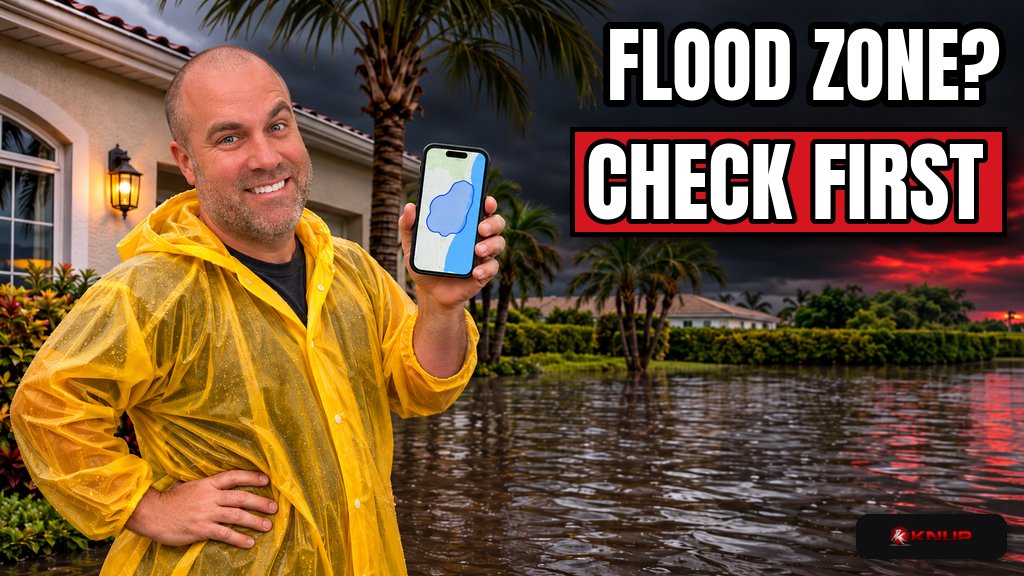
In Florida, water is part of the deal. It's why people move here. It's also why one of the first things I'd want to know about any house is whether it sits in a flood zone.
The good news is you don't need to pay anyone or wait on anyone to find out. FEMA's flood maps are public, and you can look up any address yourself. The harder part is knowing what the result actually means, and what it doesn't.
Quick note before we start: I'm a Realtor, not an insurance agent, surveyor or engineer. Flood maps change and every lender and insurer has its own rules. Use this to ask better questions, then get the final word from your insurance agent and lender.
Why the flood zone matters when you buy
A flood zone isn't just a label on a map. It can affect a few big things at once.
Your insurance. Most people don't realize their homeowners policy doesn't cover flood damage. Florida's own required flood disclosure says it plainly: "Homeowners' insurance policies do not include coverage for damage resulting from floods." Flood coverage is a separate policy.
Your loan. According to FloodSmart, the official site of the National Flood Insurance Program, if a property is in a high-risk flood zone and has a government-backed mortgage, flood insurance is required. The federal HelpWithMyBank.gov site also notes that a lender can require flood insurance even when a home is not in a high-risk area, because that's a matter of the contract between you and your lender.
Your monthly cost. If flood insurance is required, or just smart, that's another bill on top of your mortgage, taxes, homeowners insurance and any HOA. You want to know that number before you make an offer, not after.
Step 1. Look up the address on FEMA's Flood Map Service Center
The official source is the FEMA Flood Map Service Center. FEMA describes it as the official public source for flood hazard information produced in support of the National Flood Insurance Program.
FEMA's guide for homeowners and renters lays out the basic steps:
- Visit the Map Service Center.
- Type in the address.
- Click the dynamic map button to view the flood map for that spot. FEMA calls a printable piece of the map a FIRMette.
You'll see the property on the map with shaded areas and zone labels. Zoom in. Find the actual lot, not just the street. Flood zone lines can run right through a neighborhood, and two houses a few doors apart can land in different zones.
FEMA also points out that maps are continually updated, and what you download today may be replaced by new maps later. So check the effective date on the map, and check again if a closing drags on.
Step 2. Figure out what the zone letters mean
The map will show a zone label. Here's the plain English version, based on FEMA's flood zone definitions.
High-risk zones that start with A or V
These are called Special Flood Hazard Areas, or SFHAs. FEMA defines them as areas expected to flood in a flood event with a 1 percent chance of happening in any given year, often called the "100-year flood."
Don't let "100-year" fool you. FEMA notes that Zone A areas have a 26 percent chance of flooding over the life of a 30-year mortgage. FloodSmart puts it as about a 1 in 4 chance.
- A zones (A, AE, AH, AO and others) are high-risk areas, usually tied to rivers, lakes, low ground or heavy rain.
- V zones (V, VE and others) are high-risk coastal areas that also deal with storm waves.
Moderate and low-risk zones
- Zone B or shaded X is moderate risk. FEMA describes these as areas between the 1 percent annual chance flood and the 0.2 percent annual chance flood, sometimes called the 500-year flood.
- Zone C or unshaded X is minimal risk, meaning outside the high-risk area and higher than the 500-year flood level.
Low risk is not no risk
This is the part people skip. FloodSmart says that from 2014 to 2024, nearly one-third of National Flood Insurance Program claims came from areas outside high-risk flood zones. FEMA still recommends flood insurance in moderate and lower risk areas, even when a lender doesn't require it.
So an X zone is good news. It's just not a guarantee.
Step 3. Ask the seller for the flood disclosure
Florida added a specific flood disclosure for home sales. Under Section 689.302 of the Florida Statutes, a seller of residential property must complete and give the buyer a flood disclosure at or before the time the sales contract is signed.
The form asks the seller whether they:
- Know of any flooding that damaged the property while they owned it
- Filed an insurance claim for flood damage, including with the National Flood Insurance Program
- Received assistance for flood damage, including from FEMA
The form also defines flooding to include overflow of inland or tidal waters, rapid buildup of runoff or surface water from a source like a river, stream or drainage ditch, and sustained standing water from rainfall.
Read it carefully. Keep in mind it only covers the seller's time owning the home. If they bought it two years ago, it won't tell you about the ten years before that.
Step 4. Look past the map
The flood zone is a starting point. Here's what else I'd want to check on a Florida house.
- Ask about an Elevation Certificate. It's a FEMA form that documents a building's elevation, and it can matter for flood insurance pricing. Some sellers have one, especially in high-risk zones. Ask early.
- Look at the lot. Is the house lower than the street? Is there a retention pond, canal or drainage ditch nearby? Where does water go when it rains hard? Visit after a storm if you can.
- Look at the house. FloodSmart lists building features that affect flood risk, like whether the first floor is raised, where the air conditioning, electrical panel and water heater sit, and the type of foundation.
- Check the neighborhood's history. FloodSmart has tools on flood risk and past claims in an area. Your insurance agent can also help.
- Talk to the neighbors. Ask if the street floods in big storms. People usually know.
None of this replaces a home inspection. If you're buying an older Florida home, you'll also hear about the 4-point inspection and the wind mitigation inspection. Flood is its own separate question.
Step 5. Get a flood insurance quote before you make an offer
Once you know the zone, call an insurance agent and get an actual flood quote on the specific address. Don't guess and don't go off what a friend pays. FEMA says flood insurance pricing now looks at the individual property's risk using things like distance to a flooding source, the cost to rebuild and elevation, so two houses in the same zone can get very different quotes.
Ask your agent:
- Is flood insurance required for this loan?
- What would a flood policy cost on this address?
- Does an Elevation Certificate change the price?
- Is there a waiting period before coverage starts, and how does that work at closing?
Then plug that number into your budget. If it changes the house from affordable to tight, you want to know now. I cover more of the buying process in How to Buy a House in Florida.
Mistakes to avoid
Assuming "not in a flood zone" means "never floods." Every property has some flood risk. X zones flood too.
Checking the zone once and never again. Maps get updated. Check the effective date, and recheck if anything changes before closing.
Trusting a listing or a website summary. Look it up yourself on FEMA's map, and confirm with your insurance agent and lender.
Waiting until after the inspection to price flood insurance. By then you may be deep into your inspection period. Get the quote early.
Skipping it because the house is inland. Heavy rain and drainage problems can flood homes nowhere near the beach.
Final thoughts
Checking a flood zone takes about five minutes on FEMA's free map, and it's one of the most useful things you can do before writing an offer on a Florida house. Look up the address, understand the zone, read the seller's flood disclosure, look past the map, and get a real insurance quote.
If you're on the selling side, see How to Prepare Your House to Sell in Florida.
FAQ
How do I find out what flood zone my house is in?
Go to the FEMA Flood Map Service Center at msc.fema.gov, type in the address, and open the dynamic map. The zone label for that spot will show on the map. It's free.
What flood zones are considered high risk?
Zones that start with A or V are high-risk Special Flood Hazard Areas. Zones B, C and X are moderate to low risk.
Is flood insurance required in Florida?
Not for every home. If a home is in a high-risk zone and has a government-backed mortgage, flood insurance is required. A lender can also require it outside high-risk zones. Ask your lender and insurance agent about the specific property.
Does homeowners insurance cover flooding?
Generally no. Florida's required flood disclosure states that homeowners' insurance policies do not include coverage for flood damage. Flood coverage is a separate policy.
Do Florida sellers have to disclose past flooding?
Florida law requires sellers of residential property to give buyers a flood disclosure at or before signing the sales contract. It covers whether the seller knows of flood damage, filed flood claims, or got flood assistance while they owned the home.